The zeer pot (pot-in-pot cooler)
Real refrigeration with no power — if, and only if, your air is dry.
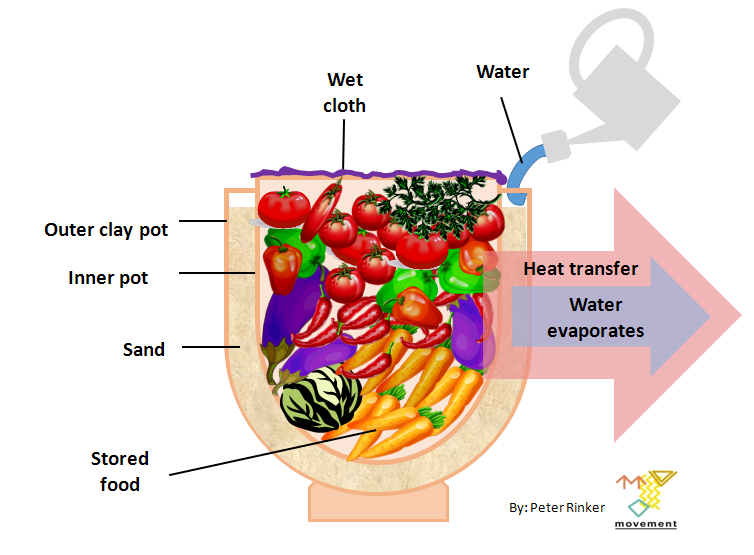
What it is
A clay pot inside a larger clay pot, with wet sand packed between them and a damp cloth over the top. Water evaporating from the outer pot pulls heat out of the inner one.
The numbers
- Field testing in Burkina Faso measured about an 8°C (14°F) average drop for the clay-in-clay design — better than clay-in-plastic variants, which managed 4–5°C.
- Typical real-world performance is more commonly 1–3°C (2–5°F) of average daily reduction across designs and conditions.
- It works meaningfully only in low humidity — roughly under 40% RH. The theoretical floor is the wet-bulb temperature, and nothing gets you below it.
- Needs water added daily, sometimes twice in real heat.
Why it's here
In dry heat it genuinely extends the life of vegetables by days to weeks, with no power whatsoever. For anybody in the desert southwest or the dry interior, this is a serious tool, not a curiosity.
The automation angle
Two sensors tell you everything: temperature inside the pot and relative humidity outside it. Plot them against each other for a week and you will understand evaporative cooling better than any article can teach you — including precisely which summer days it stops working on.
The catch
Humidity is the whole story. In the humid Southeast in August, a zeer pot does close to nothing, and the videos never mention the local climate they were filmed in. Check your own dewpoint before you build one. It also is not refrigeration — it does not reach safe temperatures for meat or dairy, ever.