The hydraulic ram pump
A pump with two moving parts that runs on falling water, forever, with no electricity at all.
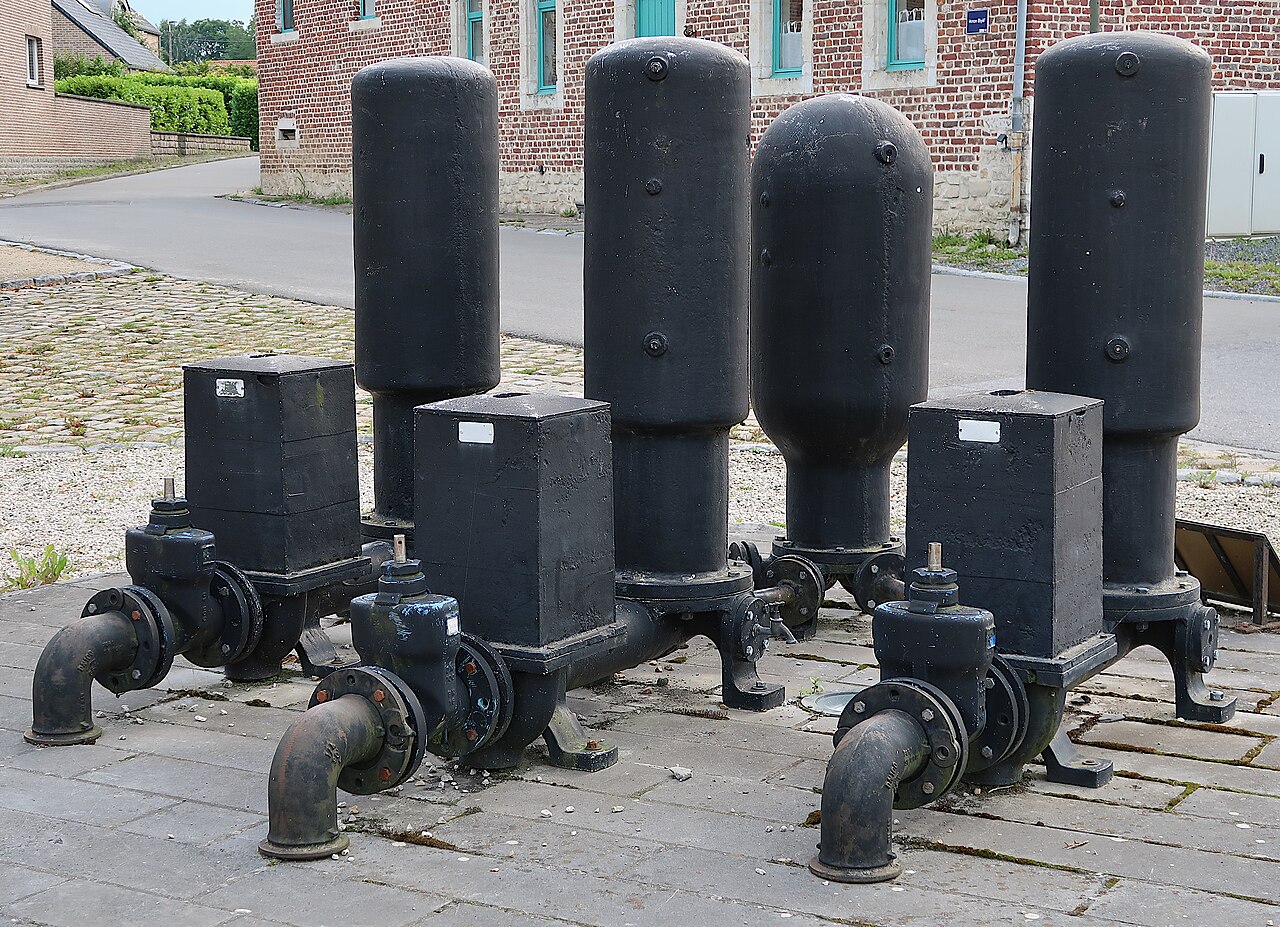
What it is
A valve body plumbed into a drive pipe from a creek or spring. Water builds speed down the pipe, slams a waste valve shut, and the pressure spike from that water hammer pushes a slug of water up a delivery line. Then the valve reopens and it does it again, about once a second, for decades.
The numbers
- Lifts water roughly 10 to 25 times the height of the drive head. Six feet of fall can push water sixty to a hundred and fifty feet uphill.
- Delivers on the order of 10% of the water that passes through it — the rest goes back out the waste valve and down the creek, where it was going anyway.
- Two moving parts. Two valves. Rebuild kit is a handful of rubber.
- Invented by Joseph Montgolfier in 1796 — yes, the balloon brother. Installations have run for 50+ years.
Why it's here
This is the purest example of the whole idea behind this site: the old way was already automated. It needs no panel, no battery, no controller, no account, and no winter plan. It just thumps.
The automation angle
An $8 vibration sensor strapped to the body answers the only question a ram pump ever raises: *is it still thumping?* Silence for ten minutes is the alert. That's the entire automation budget.
The catch
It needs falling water that never stops — a creek or a spring with real year-round flow and at least 3 ft of drop to the pump. No fall, no ram. It also needs a screened intake, because one stick in the drive pipe stops it, and it will stop silently if you don't put that $8 sensor on it.
In the guide
Chapter 10 of the Autofarmation guide is the full build. Autofarmation →