Olla irrigation
Drip irrigation, invented two thousand years before the drip line, with nothing to clog.
What it is
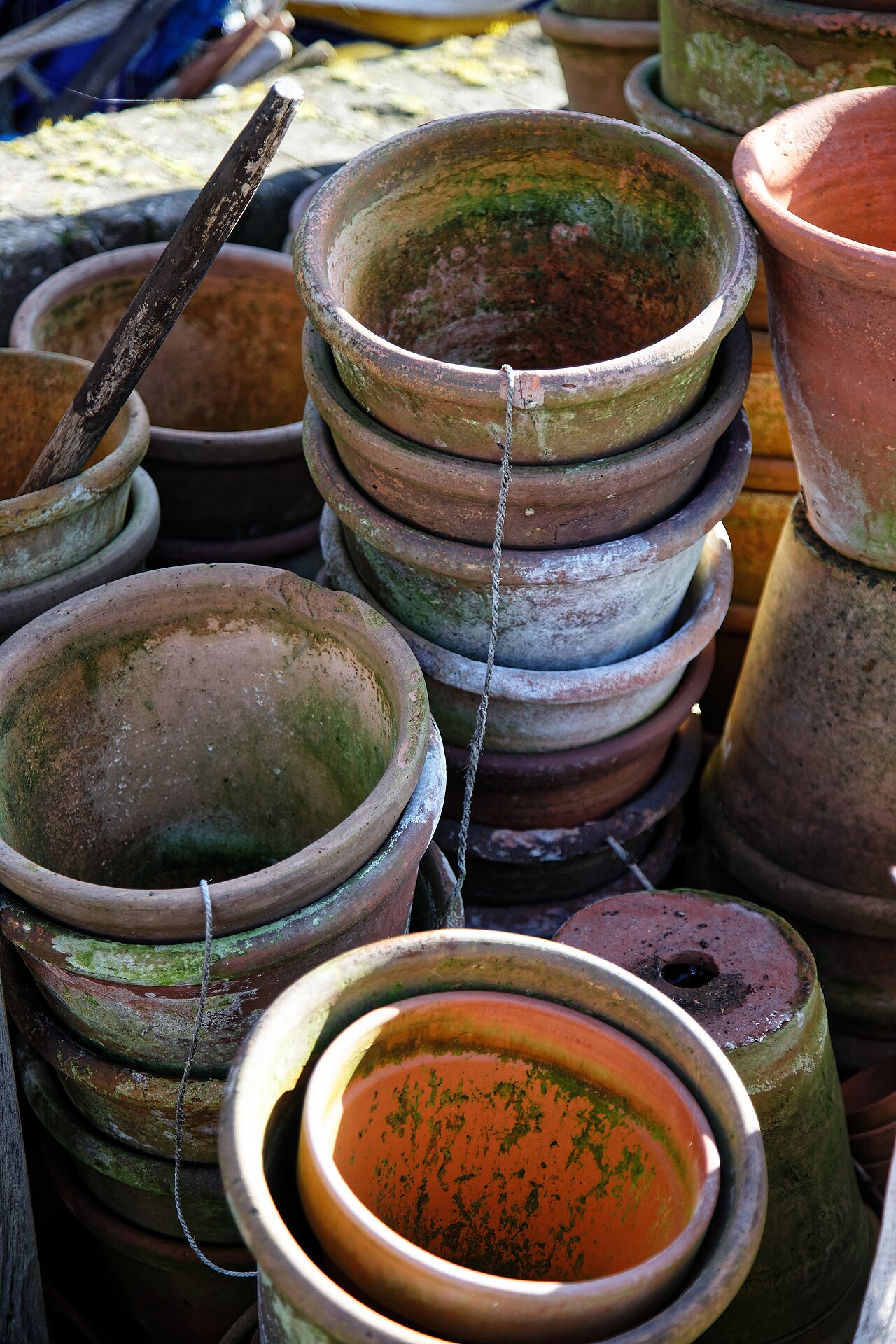
An unglazed clay pot buried to its neck among the plants and kept full of water. The pot weeps through its own wall at whatever rate the surrounding soil pulls — so the plants take water as they need it, the surface stays dry, and nothing evaporates off the top.
The numbers
- Documented water savings on the order of 50–70% versus surface watering.
- $8–25 per pot bought, or about $6 for two cheap terracotta pots siliconed base to base with the top drain hole plugged.
- One 2-gallon olla serves roughly a 3 ft radius in most soils — closer in sand, wider in clay.
- Moving parts in the entire system: zero. Emitters to clog: zero. Pressure regulators to fail: zero.
Why it's here
Every drip system on earth fails the same two ways: a clogged emitter you don't notice, and a pressure regulator that dies in August. The olla has neither part. It also waters the root zone instead of the soil surface, which is most of where the savings come from.
The automation angle
Run a float valve manifold off a tank and the ollas keep themselves topped up. That gives you a passive irrigation system with exactly one moving part on the whole farm — and a tank level sensor tells you the draw rate, which is a very good proxy for how hard the plants are working.
The catch
Small intensive beds only. Filling by hand does not scale to a field, and the float-valve version means plumbing a line to every bed. They also crack in a hard freeze — pull them in the fall or you'll buy them twice.