Hügelkultur
A raised bed built on buried wood. It works — starting in about year two.
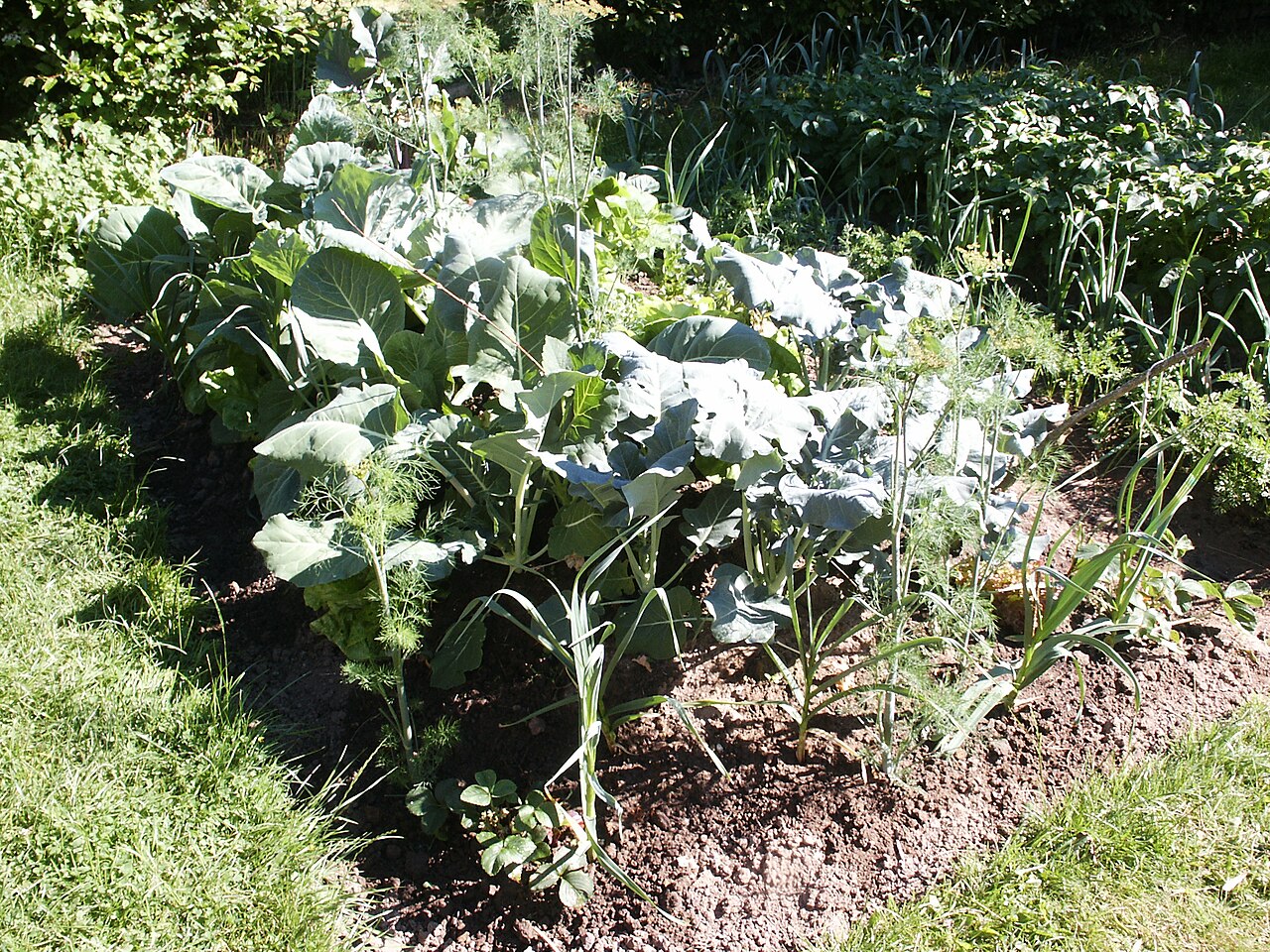
What it is
A mound or bed built over a core of logs and brush, covered with soil and compost. As the wood decays it holds water like a sponge and slowly releases nutrients.
The numbers
- The water-holding effect is real and is why it's recommended in dry country: a rotting log holds several times its weight in water.
- The first season commonly shows nitrogen deficiency — the decomposers take nitrogen out of circulation to break the wood down, and your plants compete for what's left.
- The mound settles substantially over 2–3 years as the wood collapses.
Why it's here
It genuinely turns a brush pile into a bed and does reduce irrigation over time. In arid country that's a real advantage, not a stylistic one.
The automation angle
A soil moisture probe at root depth is the honest referee here. Compare the hügel bed to a conventional bed in the same weather and you'll see the effect — or you won't, which is also worth knowing.
The catch
Year one is a nitrogen hole. Plan for it: heavy compost, extra nitrogen, or plant legumes and don't expect a crop. Avoid using black walnut (juglone) or heavily rot-resistant woods like black locust and cedar, which won't break down and will hold the bed back for a decade.