French marigolds for root-knot nematodes
The famous companion-planting claim is mostly wrong. The one specific version of it is genuinely right.
What it is
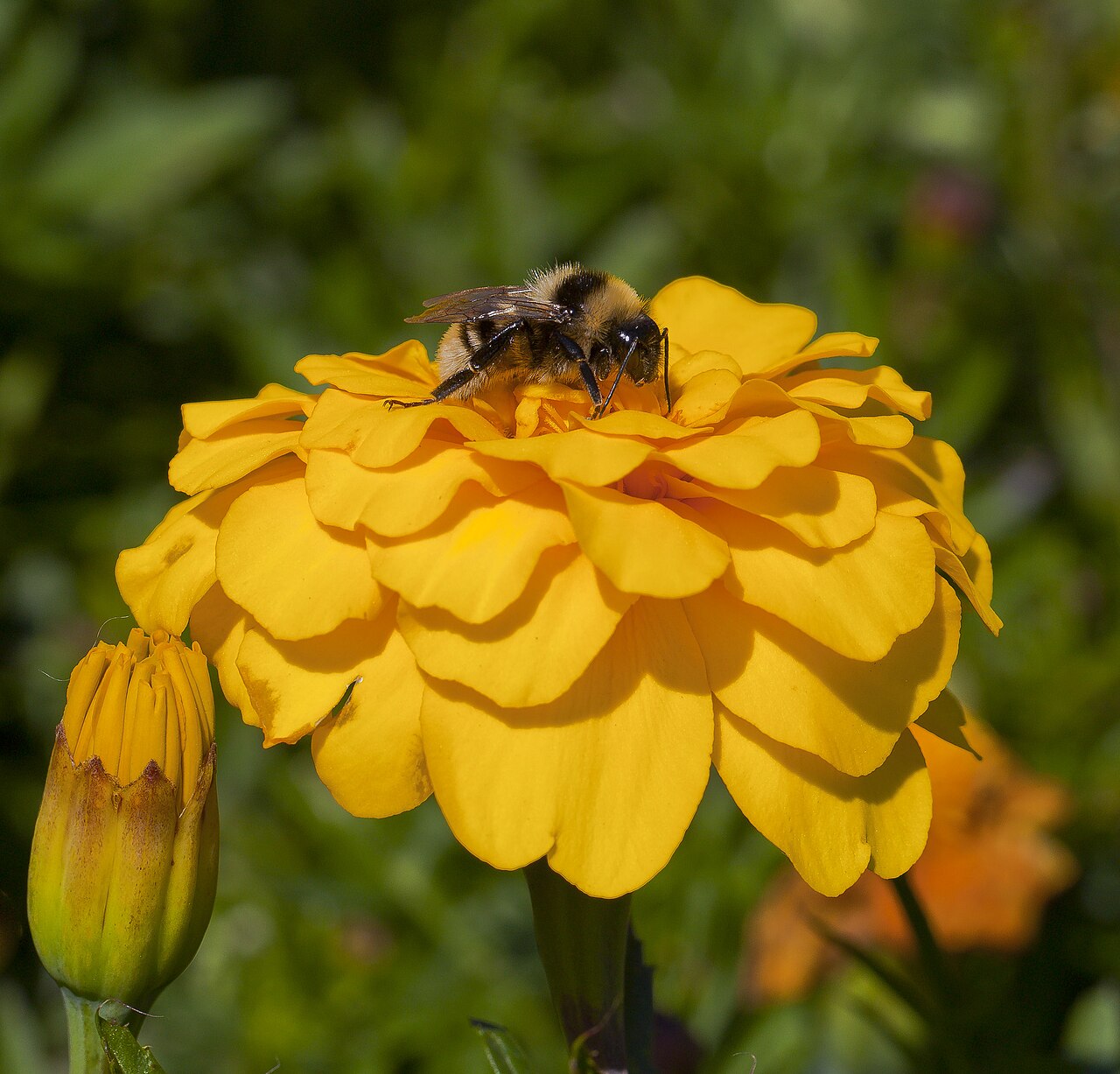
Planting *Tagetes patula* — French marigold — as a cover crop against root-knot nematodes (*Meloidogyne* spp.). The roots release alpha-terthienyl, which is toxic to the nematodes and to a range of soil fungi and bacteria.
The numbers
- The mechanism is real and identified: alpha-terthienyl, produced by the living roots.
- Cultivars with documented suppression include 'Nema-Gone', 'Golden Guardian', 'Petite Blanc', 'Queen Sophia', and 'Tangerine'.
- It only works while the marigold is actively growing — and research found suppression required moist soil; in dry soil the effect disappeared.
- The effective method is to plant a whole bed solid to marigolds for an entire summer season and grow nothing else in it.
- Nematode populations return the following year once susceptible plants go back in. This is a rotation tool, not a cure.
Why it's here
It's here as the model case for how this site grades things. 'Marigolds repel pests' as a blanket claim is folklore. 'A solid season of French marigolds suppresses root-knot nematodes in moist soil' is a researched, extension-documented practice. Same plant, completely different claim.
The automation angle
A soil moisture probe, honestly — because the research says the suppression needs moist soil, and the difference between a working bed and a wasted summer may be irrigation.
The catch
A few marigolds scattered among the tomatoes does nothing for nematodes. You give up the bed for a season. And this is specific to root-knot nematodes — it is not a general insect repellent, whatever the seed-packet copy says.